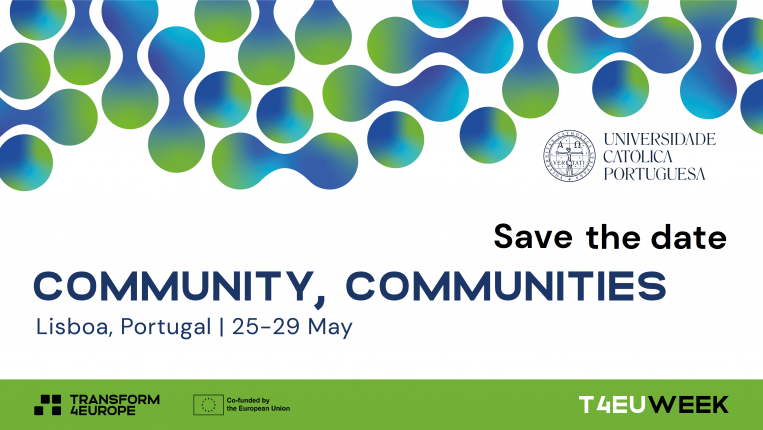
Universities today face challenges that go beyond the transmission of scientific knowledge. The growing complexity of research, teaching, and collaboration contexts demands advanced skills in communication, active listening, feedback, integration, collaboration, leadership, and collective problem-solving.
The Possibility Academy offers a six-week experiential program designed for doctoral students and postdoctoral or early-career researchers at the Portuguese Catholic University, creating a space for practical learning and experimentation to foster a more collaborative, responsible, and innovative academic culture.
The program is based on participatory methodologies, maps of distinctions, experiential learning, and applied communication practices, enabling participants to immediately apply what they learn to their academic, scientific, and professional contexts.
| Target public | Duration | schedule | certification | language | method |
|---|---|---|---|---|---|
| PhD students | 4 x 3 hours | Every Wednesday, from May 5th to 26th, 2027 (2:00-5:00pm) | Yes | English | In person |
Methodology
The program combines:
- Practicing key distinctions.
- Visual thinking and learning maps.
- Experiments and activities in pairs and small groups.
- Experiential learning.
- Application to real-life situations in an academic context.
Each session emphasizes active participant involvement and hands-on experimentation with the distinctions presented.
Requirements
- Participants must be enrolled in any doctoral or postdoctoral program at the Portuguese Catholic University.
- Synchronous commitment: weekly 3-hour sessions.
- Asynchronous commitment: 2 to 3 hours per week for individual practice and interaction with other participants.
Program
|
Week 1 | The Future of Academic Culture |
Exploring the changes needed to create a more mindful, collaborative academic environment that is better suited to contemporary challenges.
|
| Week 2 |All About Communication
|
Communication as a Fundamental Skill for Research, Teaching, and Collaboration. Contents:
|
| Week 3 | A School that Listens |
Developing listening skills as an essential tool for learning, leadership, and research.
|
| Week 4 |Toward a new culture of feedback
|
|
Evalutation
Regular and punctual attendance, active participation in and preparedness for in-class discussions during the training.
| Methods | Weight (%) |
|---|---|
| Attendance | 40% |
|
Active participation in the feedback groups and discussions/ practices during the sessions |
60% |
| Total | 100% |
Learning outcomes and competences
- Identify communication patterns that limit academic collaboration.
- Develop skills in active listening and dialogue.
- Give and receive feedback in an empowering and mindful way.
- Create projects and initiatives through co-creation and collaboration.
- Contribute to a more humane, participatory, and innovative academic culture.